Category Archives: Musguide
(Español) Viladomat, un pintor del 11 de septiembre de 1714
(Español) Jackson Pollock
(Español) Antoni Tàpies, máximo representante catalán del informalismo.
(Español) Sorolla, la luz del sol y el mar
(Español) Sagrada Familia, sus vicisitudes y avatares, y sus arquitectos
The Night of Open Museums
There are initiatives that are worth preserving and especially those that are related to culture.
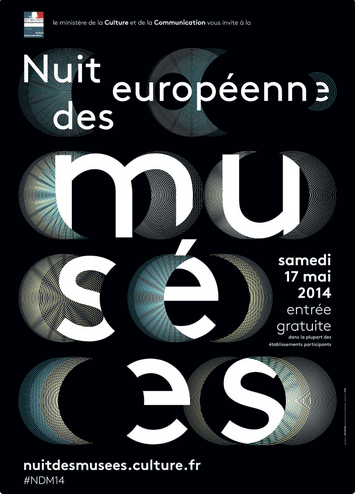
La noche de los museos abiertos.
The night of the museums.
Nuit européenne des musées.
Cultural activity in capital letters which has been held in Barcelona a few years ago, The Night of Open Museums, is commendable; and, for this reason, it would be nice to already become a habit and as an example to other locations where they have not yet tested this initiative. See the queues that form patiently to enter this or that museum, makes one feel grateful to the people who had such a happy idea. It is a dream that no respite for the whole society coasting materialism nor exclusively by technological developments.
On a night like this one born so many opportunities in a city with as much history behind Barcelona. It is accesible from the golden years of the Crown of Aragon and soak up the medieval legacy we have received an inheritance . Visitors , such as the History Museum of the City of Barcelona, not only have the opportunity to know their origins or important parts are stored there , but also enjoy the surroundings of the place where it is ; but mostly a series of buildings where it is installed and open its doors so we can look inside. Thus, the access is through a mansion that was built in the XV and XVI century in a strange place now occupied , but which, when moved stone by stone , led to the discovery of Roman and Visigoth Barcino ; ( those who are curious to know how hispanorromanos lived , how their shops, etc. . Barcino , may enter and choose the path Musguide ” The Cathedral of Barcelona and its surroundings “). A facilities also belong elegant chapel of St. Agatha of the year 1302, the famous Hall of Tinell built in just three years by King Pedro of Aragon between 1359 and 1362 , as well as the Royal Palace.
There was a time when Barcelona was the capital of one of the largest business empires in the Mediterranean. Fortunes between bourgeois population were created; City, walled lacked building land; great traders and sailors and civilians of the nobility sought in nearby villages where build their palaces, competing with each other to achieve the most sumptuous palace. They chose Montcada Street belonging to the town of La Ribera or Santa Maria del Mar. The Museum Night offers the opportunity to visit several of these palaces inside, while visiting the Picasso Museum which occupies 5 buildings there with money raised from the great bourgeois fortunes. (We recommend entering Musguide and choose “Santa Maria del Mar and the Ribera” route).
There are so many museums to visit according to the tastes of each one we would not have space to devote to them. The goal today is to give out a municipal initiative to all who love the culture has us seem laudable and take the beauty offered us his architecture and interiors of many museums.
And if you want to do Museuming always every day of the year, do not hesitate to enter Musguide and enjoy its artistic and cultural content.
On May 17 from 19h to 1h content will be free, supporting the initiative of the Night of Museums.
And if you like it do a Muslike in facebook and comment.
The sacrificial temple of the Sagrada Familia of Barcelona
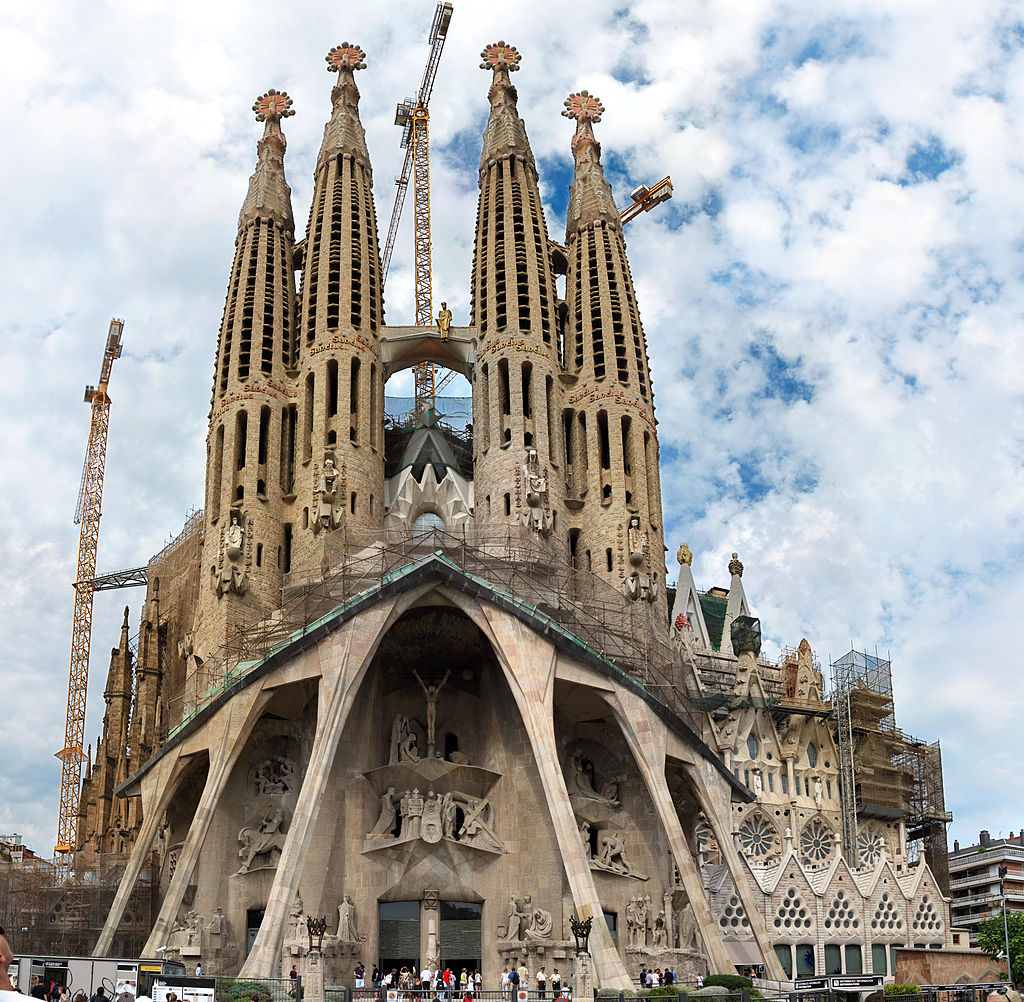
Passion Facade of the Sagrada Familia of Barcelona
When in 1910 it was going to present the model of the Nativity facade at the Paris Exposition, architects collaborating with Antoni Gaudí on the construction of the Works was asked what would have to answer if they were asked by the style in which it was the temple. Gaudí replied that they were trying to respond “gothic improved”. And obviously the great teacher makes a big gothic style that created a new improvement: an allegory transferred to architecture as a symbolic language written on each stone. As full of religion, mysticism and spirit bible needed to leave a testimony of their beliefs carved on the outer walls of the Temple. This spirit was very well played by architects who continued the construction of this great work of art , as Gaudí wanted. The new architecture continues faithfully the Gaudi thought, but do serve, as usual, our own time techniques. To all this we must attach great creativity Josep M ª Subirachs; sculptor transformed the Passion Facade of a representation of a classic tragedy of style: Each sculpture speaks for itself, it is not necessary anymore.
All who come to visit the city of Barcelona wants to see with their own eyes the wonders they heard explain the Church of the Sagrada Familia. The people who live in the City understand that is normal. La Sagrada Familia leaves no one indifferent, people who are close to open their eyes widened and express a oh! admiration when they see the Temple. Visitors fill around the facadas squares… and therefore is not always easy to be reveling in contemplating a work so full of symbolism, such as the initial letter of Mary M between the portal and Charity the Faith, or the signs of the zodiac, or the exuberant nature of the Nativity facade, etc..
The route presented in Musguide about the temple La Sagrada Familia is intended as an aid through image and explanatory text to present the most essential characteristics of each facade and try to give a guideline to know the mysteries of Gaudí intended that through various symbolism.
Often it will be necessary to put a point of abstraction to the whole order to fixate on the details, one by one, to extract juice from all representative proposed that the architect wanted to make printed in Montjuïc sandstone.